T-Mobile
T-Mobile
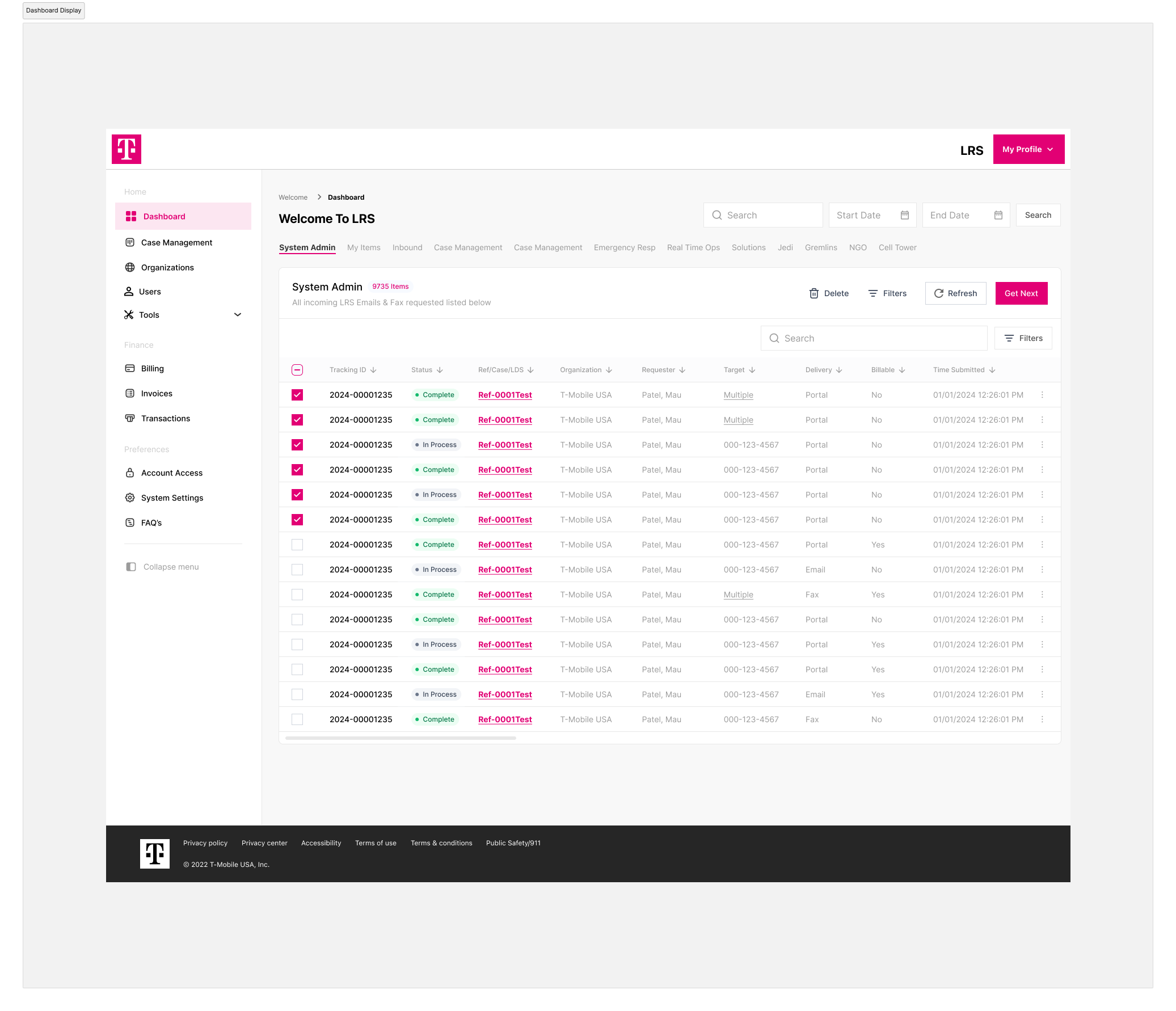
T-Mobile Legal Request System (LRS)
Designing a compliance-driven platform for managing high-volume law enforcement data requests
Project Overview
Role: Senior Product Designer
Timeline: 2020 – 2024
Platform: Web
Users: Law Enforcement, Internal Review Teams, Legal & Compliance
Scope: End-to-end product design, workflows, system definition
The Problem
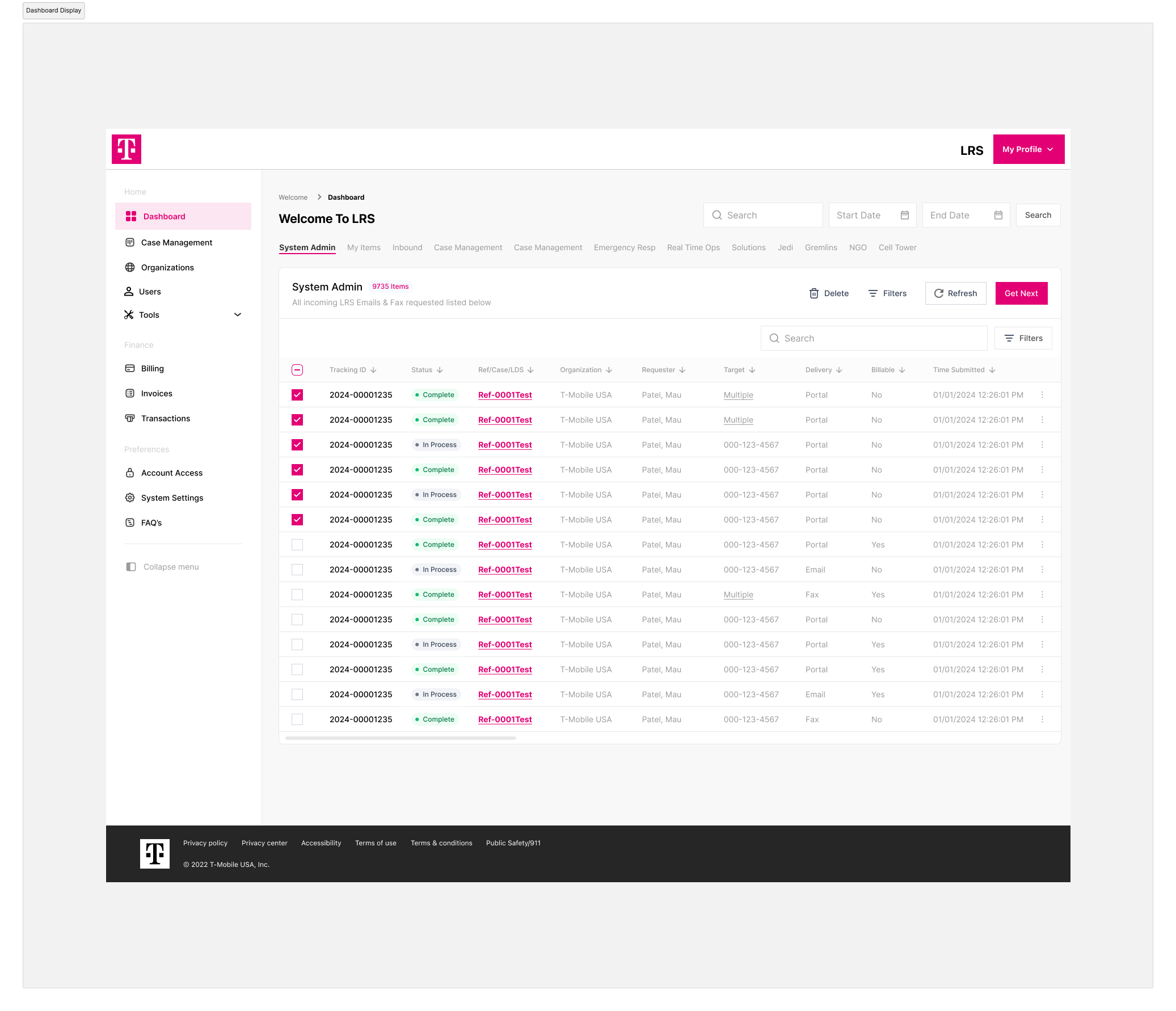
T-Mobile needed a system to manage law enforcement requests for sensitive user data.
However, the existing experience was:
Difficult to use and fragmented
Built around complex legal and compliance requirements
Lacking clear workflows for submission, review, and tracking
Not widely adopted despite years of development
Why this mattered:
Requests involved high-risk, legally sensitive data
Errors could lead to compliance issues
Delays impacted both internal teams and external agencies
The Challenge
Design a system that could:
Handle hundreds of thousands of legal requests annually
Support multiple request types (subpoenas, warrants, emergency disclosures)
Translate complex legal requirements into usable workflows
Balance usability with strict compliance constraints
Enable adoption across both internal teams and external users
My Role
Led design of the Legal Request System from concept through launch
Partnered with stakeholders, legal teams, and decision-makers to define requirements
Collaborated with product managers to align with roadmap and Agile development
Defined workflows, system logic, and feature requirements
Led design execution across key features
Worked closely with engineering teams (U.S. + offshore) to ensure implementation
Understanding the Complexity
The system needed to support:
Multiple request types (subpoenas, warrants, emergency requests)
Complex data relationships:
Phone numbers
IP addresses
Device identifiers
Subscriber data
Multi-step workflows involving submission, review, and fulfillment
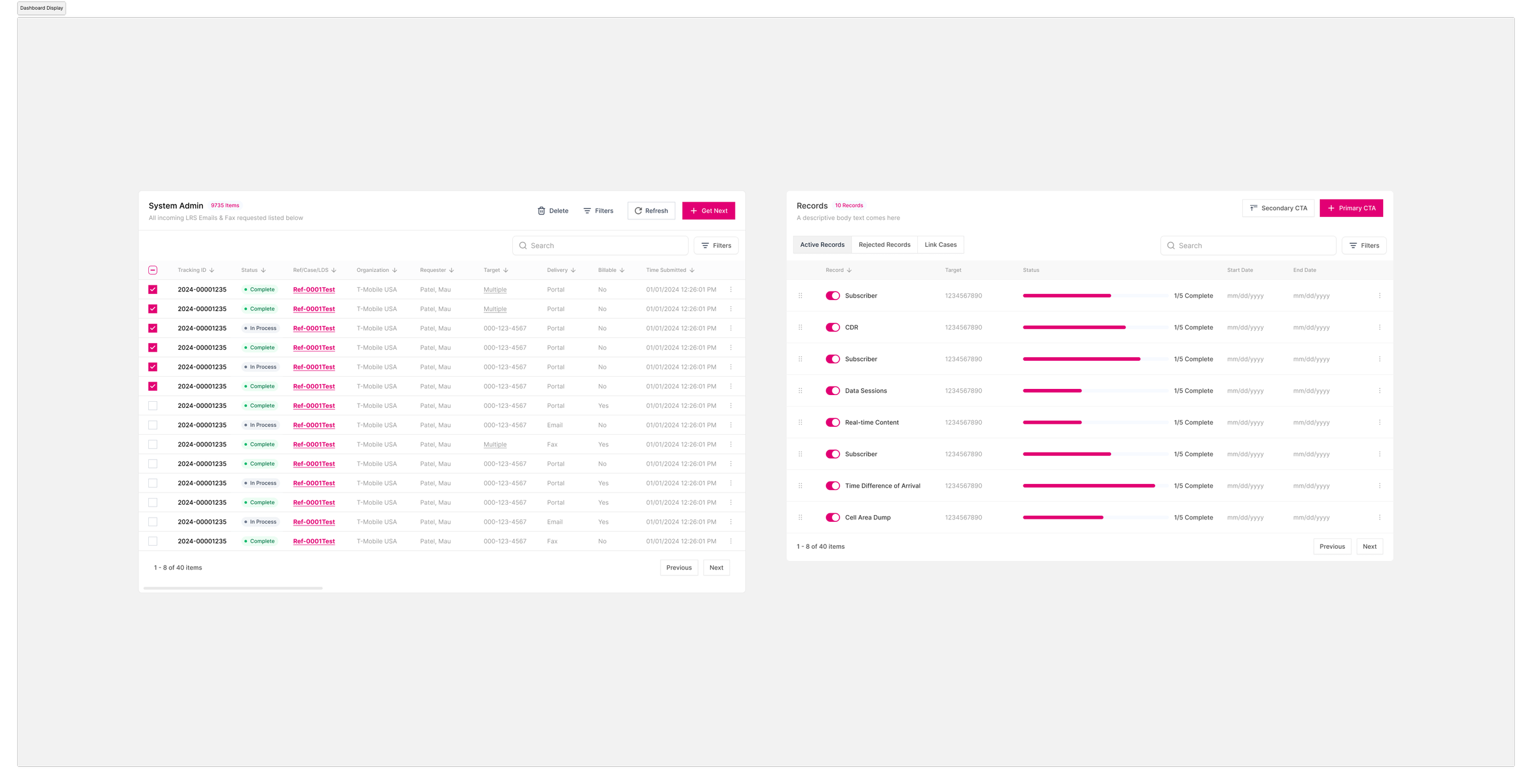
Structuring the Workflow
The core system needed to support:
Request submission
Internal review and validation
Data retrieval and fulfillment
Status tracking and updates
Product Decisions & Tradeoffs
Key decisions included:
Balancing usability vs legal accuracy
Designing flexible workflows that could support multiple request types
Prioritizing features that enabled adoption first
Structuring the system to scale with increasing request volume
The Solution
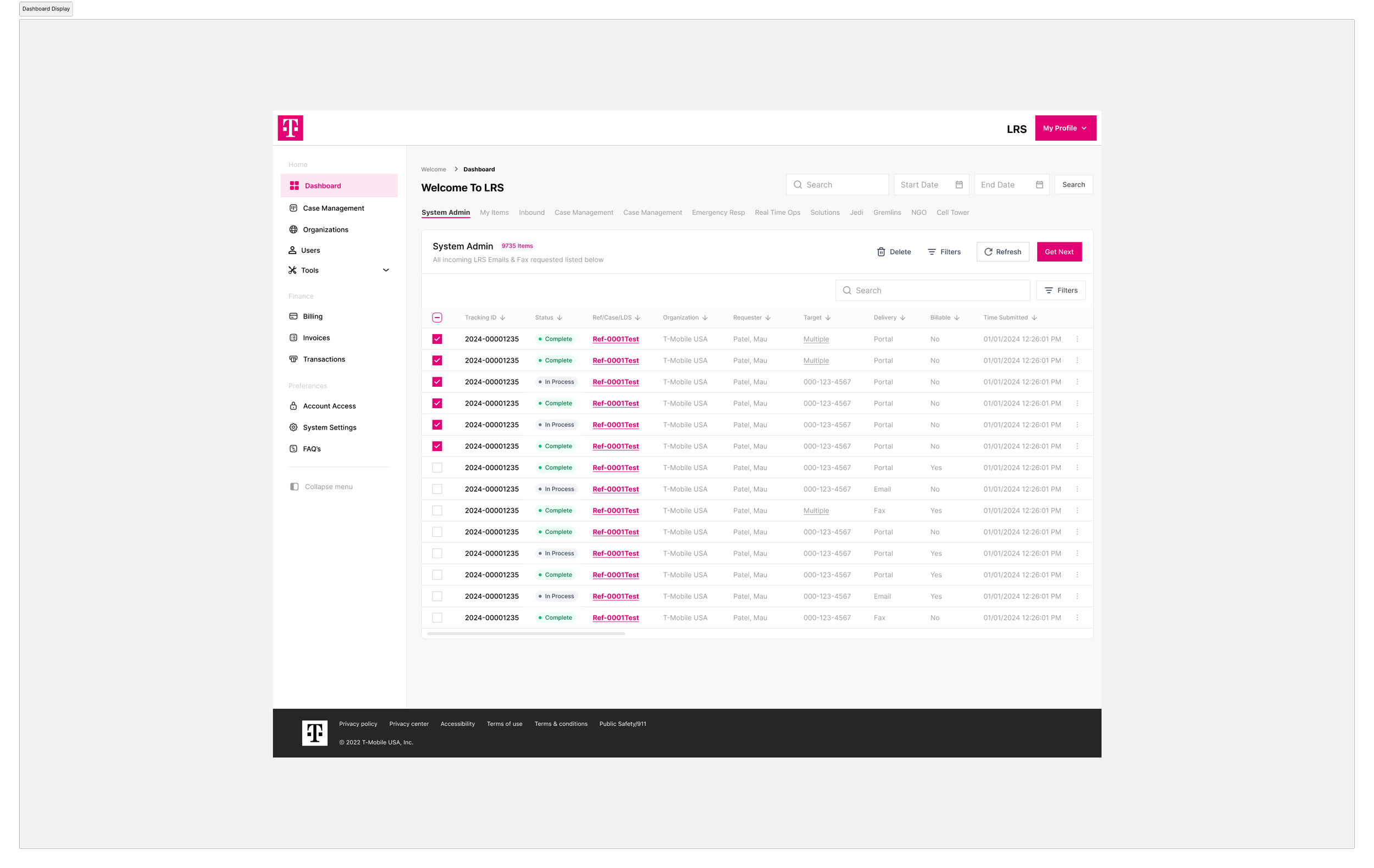
A centralized Legal Request System that:
Supports submission, review, and tracking of legal requests
Handles multiple request types within a unified workflow
Provides visibility into request status
Ensures compliance across all interactions
Key Features:
Request Submission (Structured forms for different legal request types)
Workflow Management (Clear steps for review and approval)
Status Tracking (Visibility into request progress)
Impact
Enabled adoption of a system that had previously struggled to launch
Improved efficiency in processing high-volume legal requests
Reduced confusion and errors in compliance-heavy workflows
Provided a scalable foundation for handling future request growth